Process Monitoring, Remote Support and Info Screens
In manufacturing, video is usually thought of as a security topic — cameras that
record so you can look back afterwards. Industrial AV turns this
around: cameras whose image is good enough to base a decision on in real time.
The difference lies in resolution, optics, latency and color fidelity — exactly the
properties broadcast technology was built for.
Real-Time Visual Process Monitoring in Manufacturing
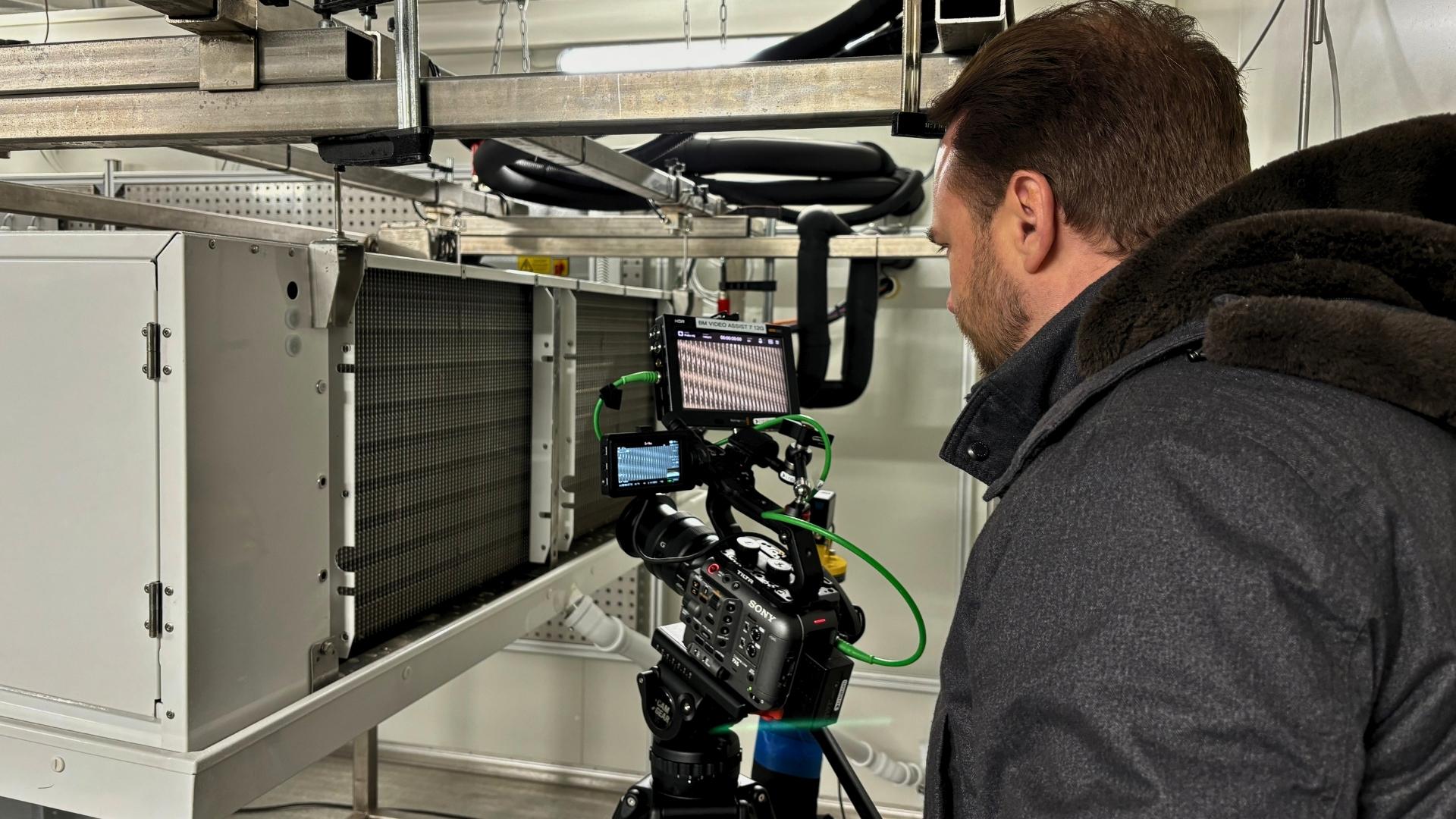
Wherever a process is judged visually — weld seam, coating, label placement,
fill level — image quality decides whether a deviation is noticed or only surfaces
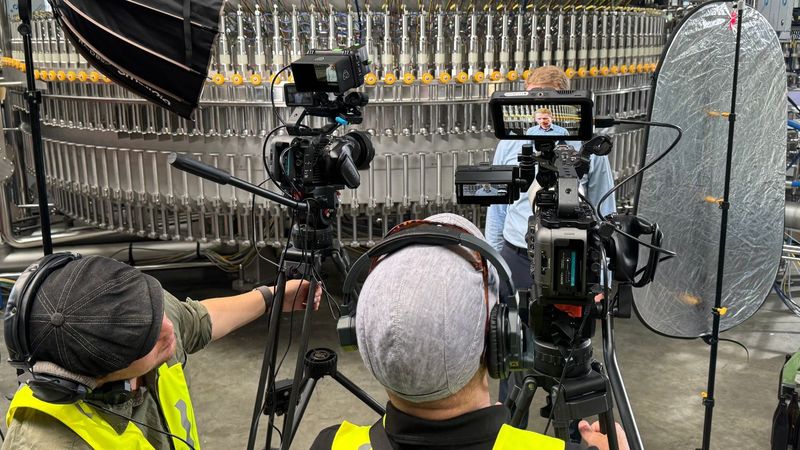
at final inspection. We use cameras with interchangeable optics, sufficient sensor size
and controlled lighting, and transmit the signal to the control room with low latency.
That way, scrap becomes visible where it occurs, not three stations later.
Camera Systems for Hard-to-Access Areas of Production
Many of the most interesting points in a plant are the ones nobody can get to:
the inside of a furnace, an enclosed area, a zone with explosion protection
requirements. Here we work with encapsulated cameras, protective housings and —
where necessary — ATEX-compliant components. What matters for zone classification is
explained in
Industrial AV in hazardous areas (Ex zones). On
durability under dust, vibration and temperature:
How long does AV technology last on the factory floor?
Remote Expert Access During Machine Failures
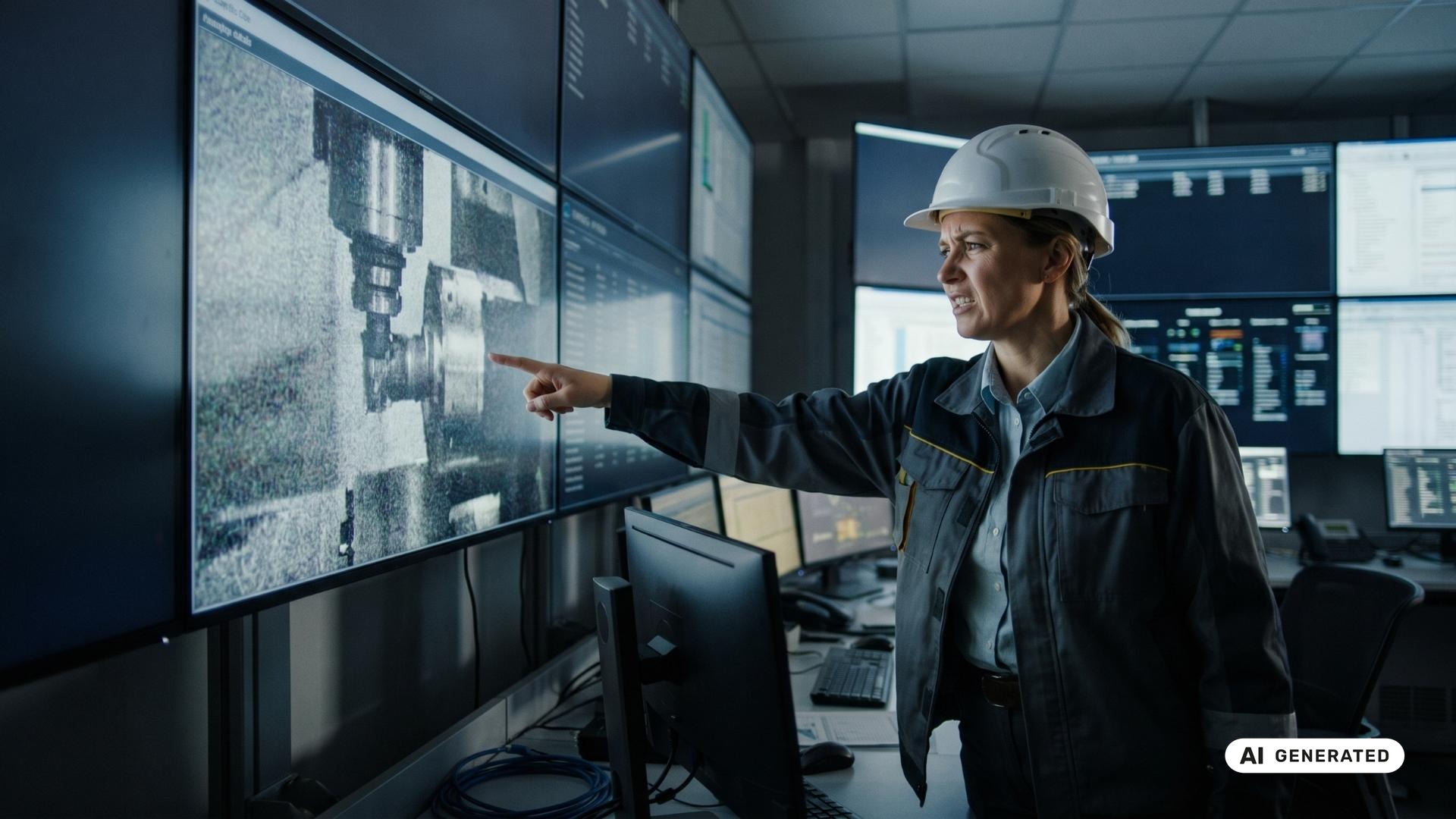
When a line is down and the manufacturer's specialist is four hundred kilometers
away, image quality determines how long the downtime lasts. A phone video is not
enough to assess a component. A permanently installed camera system with zoom,
controllable lighting and a secured release to the outside makes remote support
the first option instead of the last — and saves the trip before it is even planned.
KPI Boards and Info Screens for the Shop Floor
Screens in production environments rarely fail because of content, but because of
hardware: consumer displays in continuous operation, players without a watchdog, a
blue screen that nobody reports for weeks. We use displays rated for 24/7 operation
with sufficient brightness, plus players with remote monitoring that report a fault
themselves. KPI boards, shift schedules and safety notices are maintained centrally
and routed per hall. Fundamentals at
Digital Signage and
Is Digital Signage Worth It?
Frequently Asked Questions
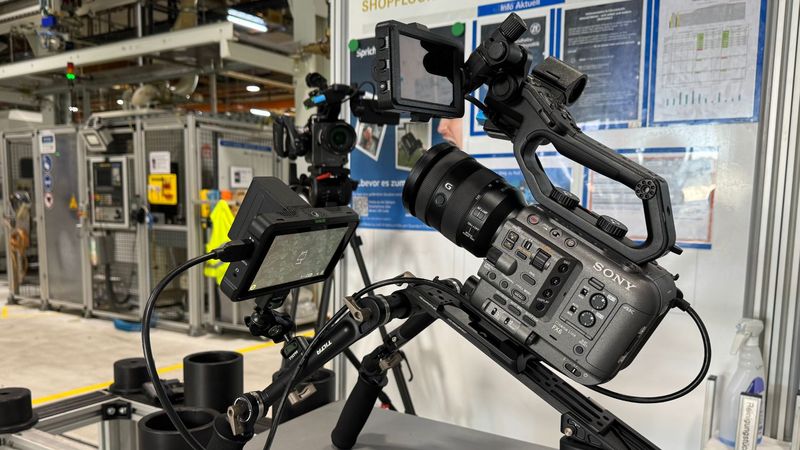
Which camera is suitable for industrial quality control?
For visual assessment by people, broadcast and industrial cameras with interchangeable optics and a large sensor are far better suited than conventional surveillance cameras — they deliver the sharpness of detail and color fidelity that a decision can rely on. For automated inspection, machine vision systems are also an option; the two are not mutually exclusive.
How does remote support work during a machine failure?
A permanently installed camera system at the critical machine is made accessible to the manufacturer's specialist over a secured connection approved by IT. They control zoom and lighting themselves and assess the component directly. In many cases this replaces the on-site visit entirely.
Do standard displays hold up in continuous operation on a shop floor?
As a rule, no. Consumer devices are designed for a few hours a day and fail quickly under continuous load, dust and temperature fluctuations. What you need are displays with an explicit 24/7 rating, higher brightness and a suitable ingress protection rating.
Can existing plant equipment be integrated?
Usually yes. Existing cameras, sensor data from MES or ERP and existing displays can be brought together into one picture, provided interfaces are documented. We survey the installed base and selectively replace whatever does not deliver the required quality.