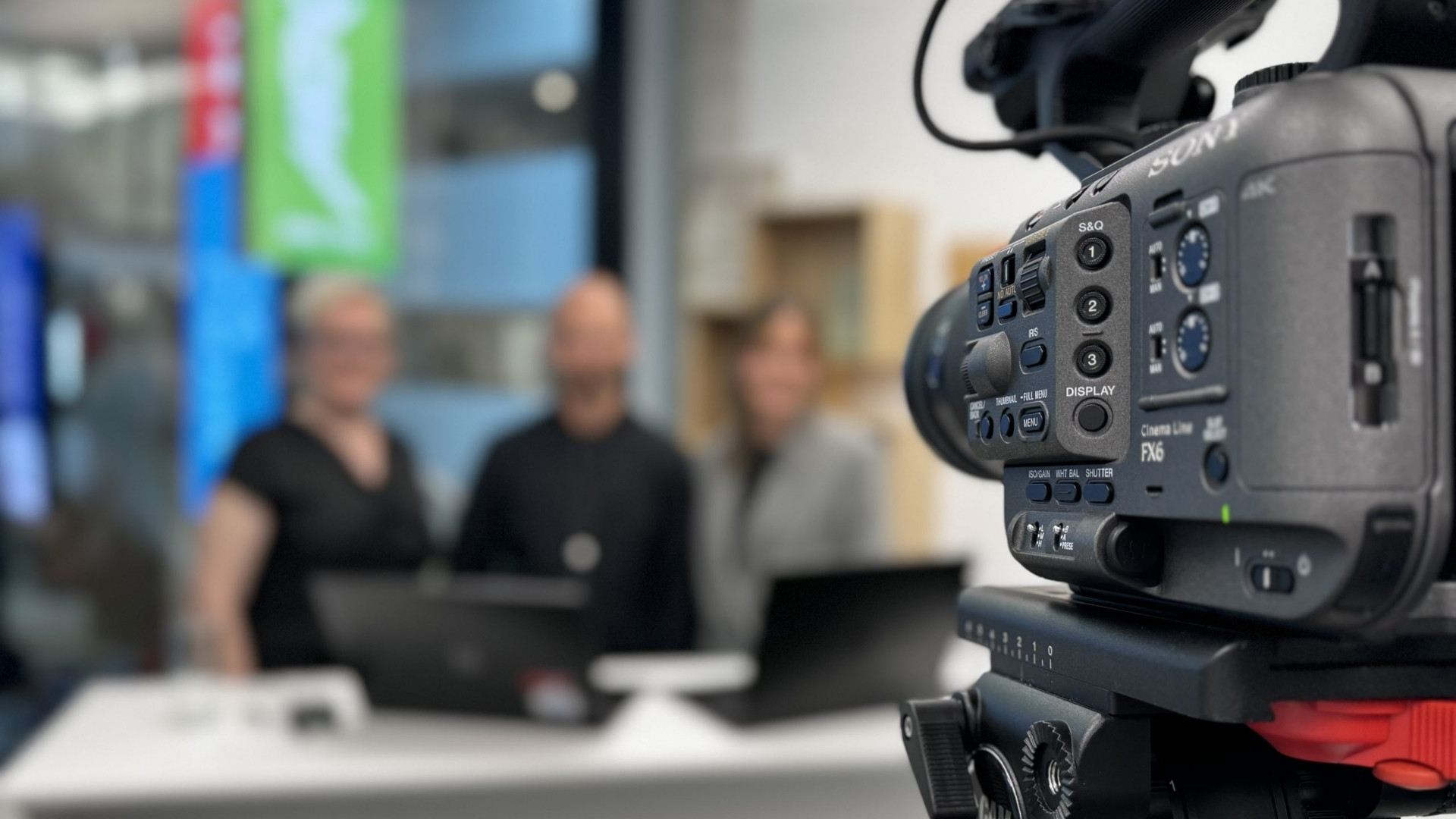
Townhall streaming for when the CEO speaks. Without dropouts.
Townhalls, CEO updates, shareholder meetings: internal communication has become business-critical. We broadcast these formats in broadcast quality — with redundant signal paths, a fixed control room and a team that owns the show run.
Tuesday, 8:55 a.m. The CEO speaks in five minutes.
5,000 employees across more than 40 locations are tuned in. This is how the morning goes when a townhall is not an experiment.
08:55
Everything is ready
Two independent signal paths are up, monitoring shows every location individually, and the dress rehearsal ran in the real setup. The board does not need to know any of this.
09:07
A node wobbles
At one location the connection drops. The control room sees it before the location reports it and switches to the second path within ten seconds. Nobody noticed.
09:45
The broadcast is in the can
Standard edits are ready within 48 hours. What used to be a state of emergency has become a process that runs the same way every quarter.
20,000
viewers run on the same architecture as 500
40+
locations in sync, each monitored individually
2
independent connections for shareholder meetings
48 h
turnaround for standard edits on retainer
Use Cases
Concrete, not abstract: four cases from practice.
Every case with a clear challenge, a clear solution and a measurable outcome.
01 / 04
CEO update from a compact studio
Challenge
Regular video messages look improvised: changing rooms, poor lighting, echoey sound. The message suffers from its packaging.
Solution
A compact one-touch studio in your own building — the CEO arrives, speaks, goes live. Consistent quality without a production crew on site.
Outcome: Professional CEO formats from the first take
Every quarter turns into a state of emergency: IT, Comms and service providers pass responsibility around. The board is waiting, and so are 5,000 viewers.
Solution
A Corporate Media Hub with clear operational ownership, monitoring and remote direction. Not an event — a repeatable process.
Outcome: Townhalls run like broadcasts, not experiments
Townhall Streaming, Shareholder Meetings and CEO Formats
A townhall doesn't fail because the technology was bad. It fails because nobody
had defined what happens when the connection drops. The difference between a web
meeting and a broadcast isn't the camera, but whether there is a
second path — and someone who switches to it within ten seconds.
Streaming Global Townhalls Reliably
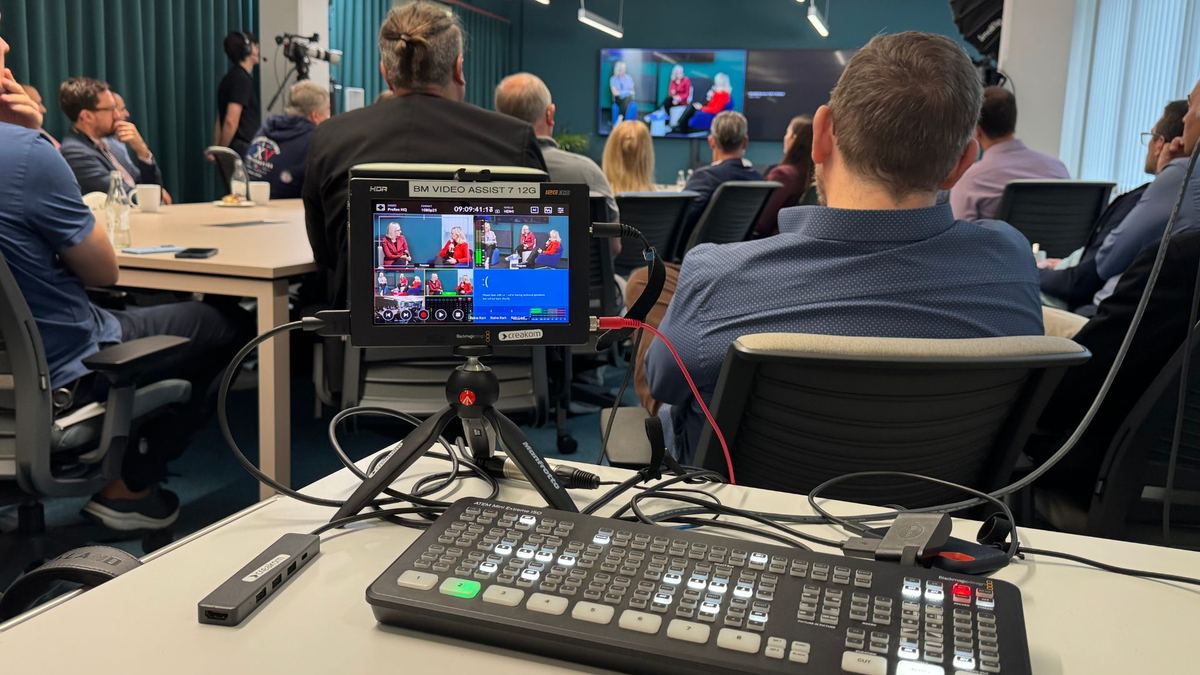
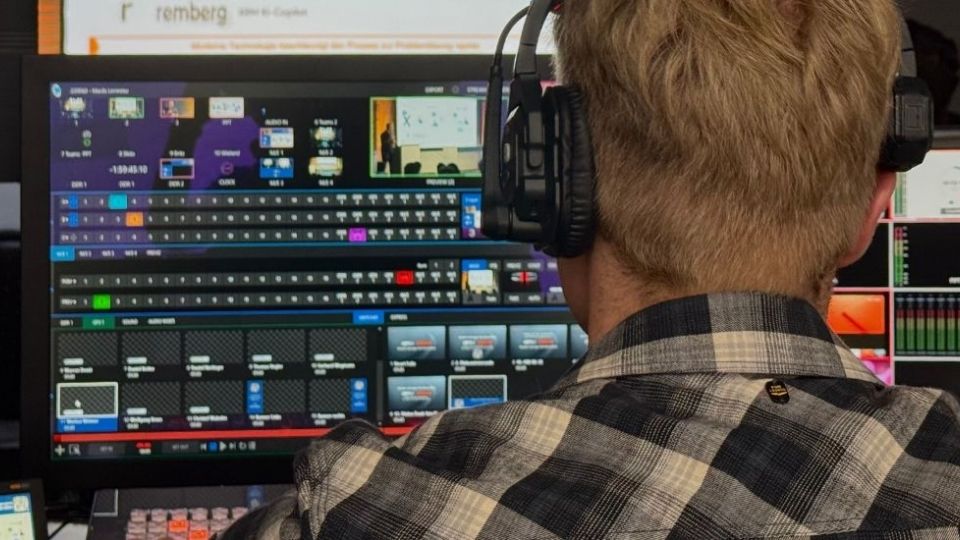
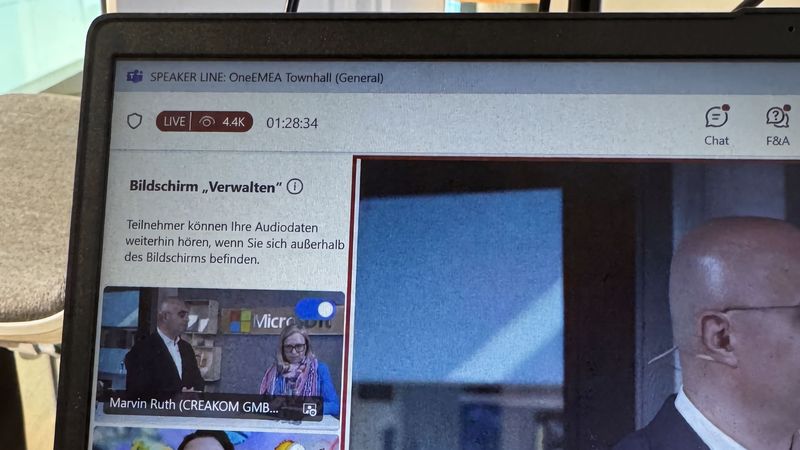
Teams livestream, production view
In a townhall spanning forty locations, bandwidth isn't the problem; distribution is:
varying network quality, firewalls with their own rules, time zones and language
versions. We rely on a central control room with
SRT distribution to regional nodes, live captioning or
interpreter channels as needed, and monitoring that shows every location
individually. If a node drops out, the control room sees it before the location reports it. Why
latency is so often underestimated is covered in
Global townhalls and network latency.
The term itself is explained in the glossary under
Townhall Meeting.
Livestreaming for Annual General Meetings and Shareholder Meetings
Whether a traditional in-person AGM with a livestream, a virtual shareholder meeting or a hybrid
format: the stream is part of the legal execution. An
interruption is not an annoyance but a risk of legal challenge. That is why we run these formats
fully redundant: two independent internet connections from different
providers, redundant encoders, duplicate signal paths in the hall and a recording
running in parallel as evidence. How this redundancy is built in practice is described in
Livestream redundancy at the shareholder meeting;
the reliability question is answered by
How reliable is a livestream for shareholder meetings?
Failure-Proof Livestreaming for Corporate Events
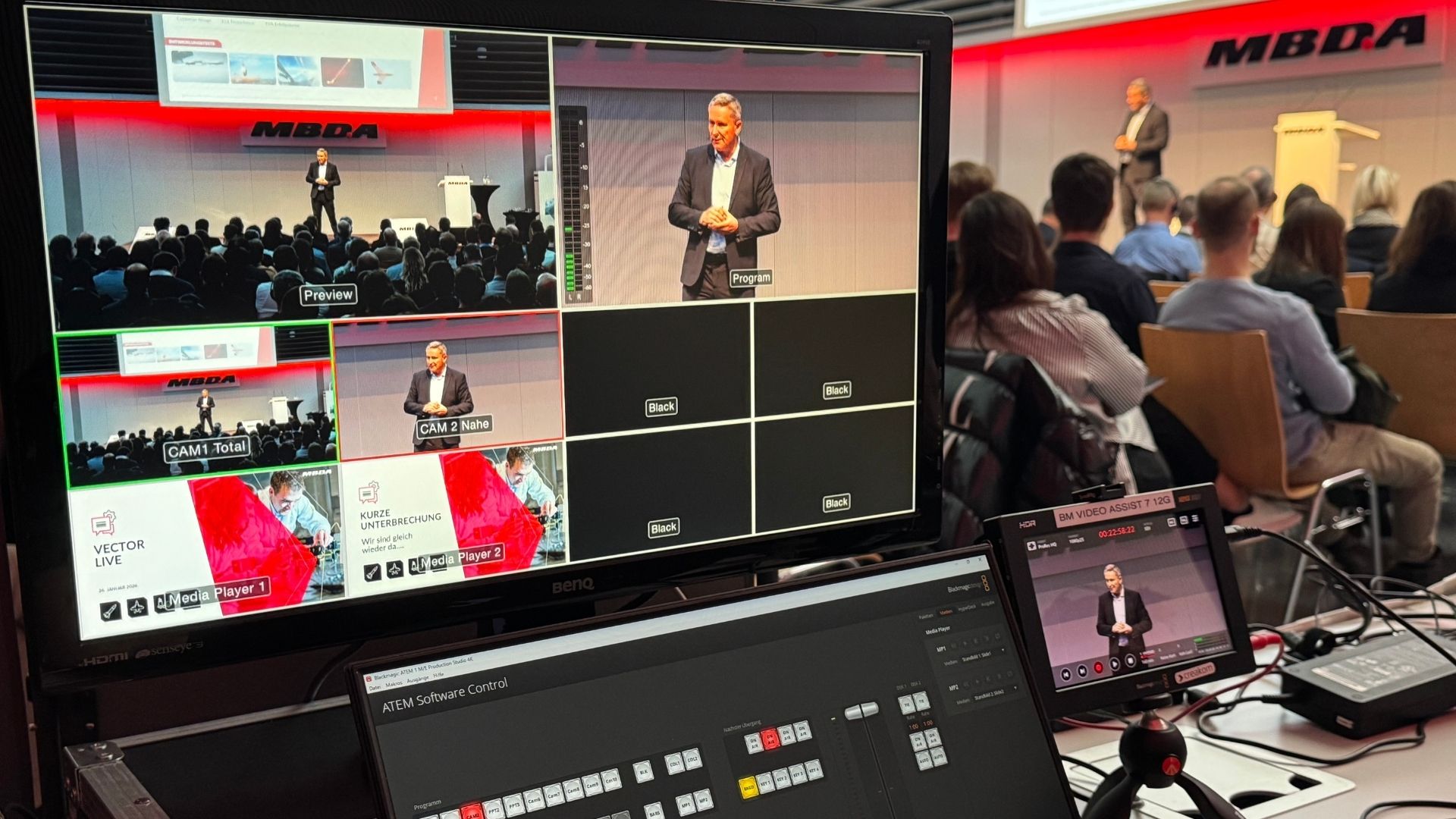
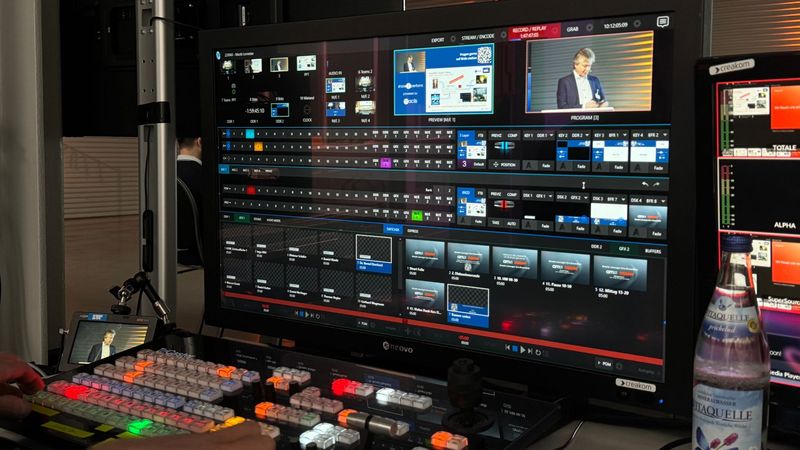
Control room with multiview
Failure-proofing is not a product feature but a chain of decisions:
no Wi-Fi for the broadcast path, but a fixed line plus cellular bonding as fallback.
No consumer platform as the only distribution route. No laptop that also runs the
presentation on the side. And always a dress rehearsal in the real setup, not in the meeting room.
Why livestreams fail in practice is shown in
When Wi-Fi brings down the livestream.
Presentation Graphics and Direction for CEO Formats
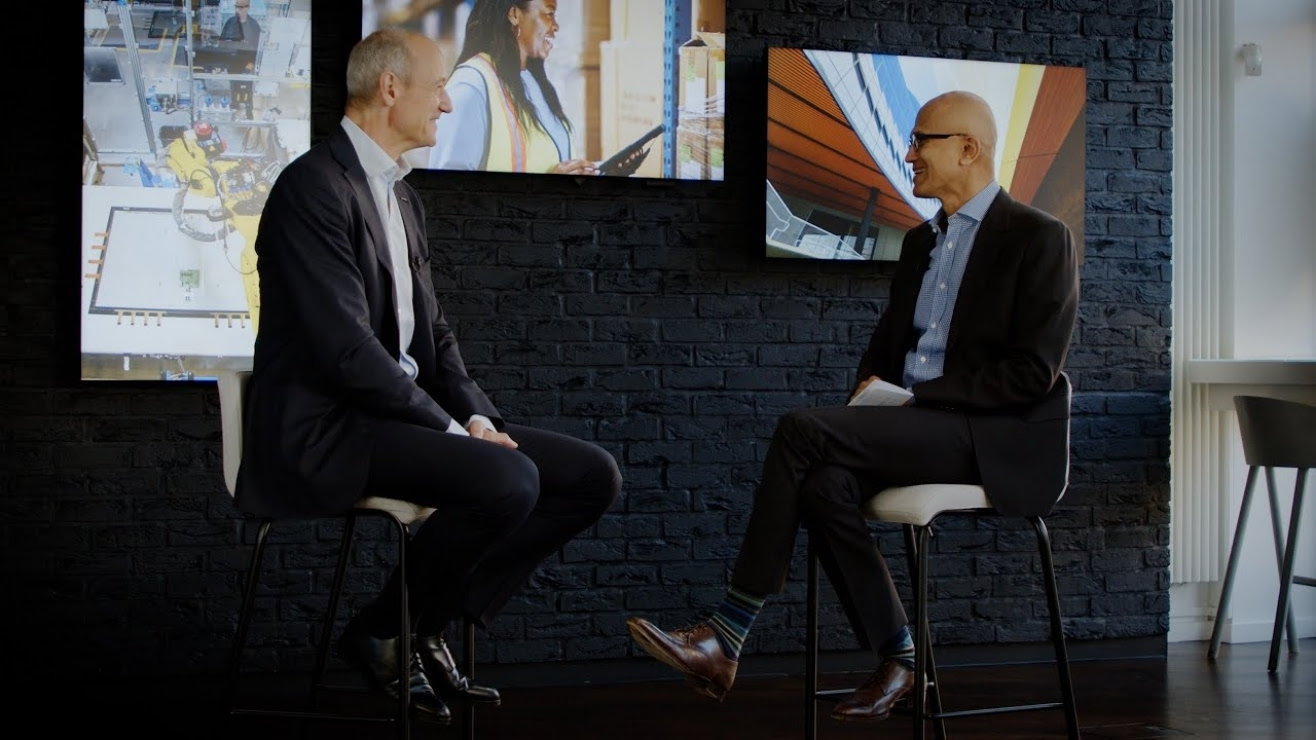
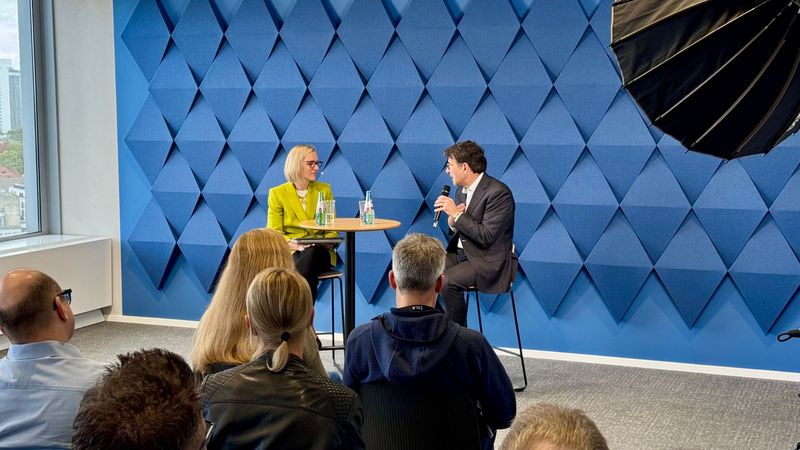
Fireside chat
A CEO update works only if it doesn't look like a screen recording. That calls for
multi-camera direction with real cuts, lower thirds and overlays in
your corporate design, and presentation graphics built for the screen rather than for
an A4 printout. We produce these elements in the same project as the technology —
they don't come from a second agency that doesn't know the broadcast format. More on this
under Content Creation and in
Multi-camera direction: why perspectives matter.
Frequently Asked Questions
How many participants can a streamed townhall have?
Technically, the number of participants is not a limiting factor in a proper streaming setup — broadcasts for 20,000 viewers run on the same architecture as for 500. What matters is the distribution platform and whether the internal networks at the locations can handle the parallel access. We check this in advance with a load test.
What distinguishes townhall streaming from a Teams meeting?
A fixed control room, several cameras with real video switching, professional audio with mixing, redundant signal paths and a team that owns the show run. A Teams meeting transmits whatever happens to be in front of the camera; a broadcast is staged and safeguarded.
Can a shareholder meeting be streamed in a legally secure way?
Yes, provided that transmission and recording are demonstrably continuous. For this we run two independent connections from different providers, redundant encoders and a separate recording chain as evidence. We agree the specific requirements with your legal department.
How much lead time does a global townhall need?
For a recurring format with an established setup, two to three weeks are enough. For a first-time global townhall with multiple locations, interpretation and network tests, plan for six to eight weeks — most of that goes to coordination with the IT teams at the participating locations.
Adjacent areas
It's rarely just one department.
Internal communication rarely stops at department boundaries — these areas get involved most often.